


The Psychology behind New Year’s Resolutions

Why We Start Strong—and Lose Steam
Every January, the energy feels almost contagious. Gym memberships spike, planners sell out, and conversations are filled with hopeful declarations: “This is the year I finally change.”
And yet, by February (or sometimes even earlier) many New Year’s resolutions quietly fade away.
This isn’t because people are lazy, weak-willed, or incapable of change. From a psychological perspective, the rise and fall of New Year’s resolutions is deeply human. It reflects how motivation works, how habits form, and how different personalities respond to goals, pressure, and expectations.
In this article, we explore:
- Why New Year’s resolutions often fail despite good intentions
- How motivation and psychology play a role in losing momentum
- How different DISC personality profiles may experience resolutions differently
- Practical ways to set resolutions that are easier to sustain
- How support—especially around beliefs, identity, and self-worth—can make a difference
This is a light, reflective piece rather than a rulebook. Personality profiles are not cast in stone, and people are always more complex than any framework. Think of this as a lens for understanding, not a label.
Why We Plan Well… but Lose Steam Quickly
At the heart of New Year’s resolutions is motivation, and motivation is not a constant resource.
1. The “Fresh Start Effect”
Psychologically, the New Year creates a mental reset. We feel distanced from past failures and more optimistic about the future. This fresh start effect boosts confidence and intention—but it doesn’t automatically build sustainable habits.
2. Motivation Is Emotional, Not Structural
Most resolutions begin with emotional fuel:
- Excitement
- Hope
- Inspiration
- A desire to become a “better version” of ourselves
But emotions fluctuate. When life resumes its usual pace—work stress, family demands, fatigue—the emotional high fades, leaving the resolution without a structure to support it.
3. Big Goals, Small Reality
Many resolutions focus on outcomes rather than processes:
- “Lose 10kg”
- “Be more confident”
- “Completely change my lifestyle”
While ambitious goals can be motivating at first, they also increase the risk of discouragement. Each missed milestone becomes evidence (in our minds) that we are “failing,” which chips away at motivation. Over time, missed expectations don’t just reduce effort—they affect beliefs about the self.
When Missed Milestones Hurt More Than We Realise
From a psychological standpoint, one of the biggest threats to resolution follow-through is self-judgement.
When we set big, rigid goals:
- Every slip feels significant
- Progress is evaluated in extremes (success vs. failure)
- Motivation becomes tied to self-worth
Instead of thinking “I missed a step,” many people unconsciously think:
- “I don’t have discipline.”
- “I never follow through.”
- “Why do I even bother trying?”
Once a resolution begins to threaten self-esteem, the mind often chooses avoidance as self-protection. Giving up feels easier than confronting repeated disappointment.
DISC Personality Profiles and New Year’s Resolutions
(A Gentle Lens, Not a Fixed Verdict)
Personality influences how we approach goals, structure, motivation, and setbacks. The DISC framework looks at four broad behavioural tendencies: Dominance (D), Influence (I), Steadiness (S), and Conscientiousness (C).
Again, no one fits neatly into a single box and behaviour can change depending on context, stress, and support.
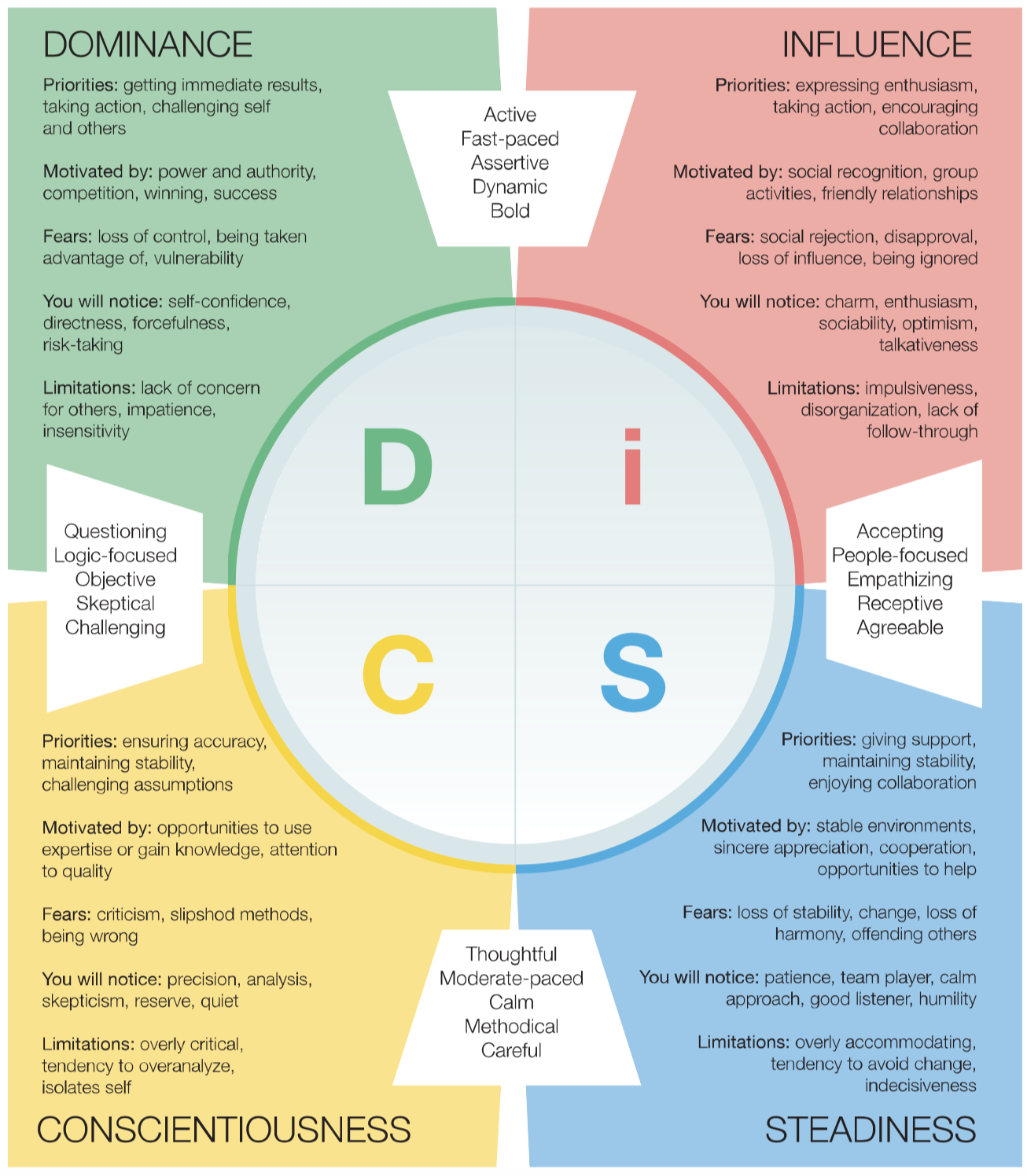
1. Dominance (D): Results-Driven, Goal-Oriented
Strengths with resolutions:
- Strong drive to achieve
- Comfortable setting bold goals
- Energised by challenge and progress
Common pitfalls:
- Setting overly ambitious timelines
- Losing interest once progress slows
- Frustration when results are not immediate
D-types may start powerfully but disengage if the resolution no longer feels efficient or rewarding.
2. Influence (I): Enthusiastic, People-Oriented
Strengths with resolutions:
- High initial excitement
- Motivated by inspiration and encouragement
- Enjoy shared goals and accountability
Common pitfalls:
- Difficulty sustaining routines alone
- Losing momentum when novelty fades
- Avoiding discomfort or boredom
I-types often benefit from social reinforcement, encouragement, and variety rather than rigid plans.
3. Steadiness (S): Consistent, Relationship-Focused
Strengths with resolutions:
- Strong follow-through once habits are formed
- Comfortable with gradual change
- Patient and persistent
Common pitfalls:
- Resistance to abrupt change
- Difficulty starting new behaviours
- Prioritising others’ needs over their own goals
S-types may not rush into resolutions—but when change feels safe and supported, they are often the most consistent.
4. Conscientiousness (C): Analytical, Detail-Oriented
Strengths with resolutions:
- Careful planning
- Strong sense of responsibility
- Clear standards and structure
Common pitfalls:
- Perfectionism
- Harsh self-criticism when standards aren’t met
- Paralysis when plans aren’t “ideal”
C-types may abandon resolutions not because they don’t care—but because they feel they’re not doing it well enough.
Why Personality Isn’t Destiny
It’s tempting to read these descriptions and conclude: “This is why I always fail.”
But psychology reminds us that awareness creates choice. Understanding your tendencies helps you:
- Design goals that work with your natural style
- Anticipate where you may struggle
- Build supports rather than relying on willpower alone
Personality influences behaviour—but it does not define capacity for change.
Making Resolutions Easier to Implement (and Stick With)
If resolutions often fail because they are too big, too rigid, or too self-critical, the solution is not to aim lower—but to aim differently.
1. Shift From Outcome Goals to Identity-Based Goals
Instead of “Lose 10kg”; Try “Become someone who exercises regularly”
Identity-based goals focus on who you are becoming, not just what you achieve.
2. Design for Momentum, Not Motivation
Motivation comes and goes. Momentum builds through:
- Small, repeatable actions
- Low resistance entry points
- Consistency over intensity
If a goal feels hard to start, it’s probably too big.
3. Build in “Imperfect Success”
Plan for lapses. Missing a day is not failure. It’s part of change. Psychologically, resilience grows when we normalise:
- Restarting
- Adjusting
- Continuing without self-judgement
4. Match the Resolution to Your Personality
- D-types: break goals into challenges with visible wins
- I-types: involve others, add enjoyment and variety
- S-types: make change gradual and predictable
- C-types: set good enough standards, not perfect ones
5. Make the Goal About Living Better—Not Proving Worth
Many resolutions quietly carry an unspoken belief … “I’ll be worthy once I achieve this.”
When goals are tied to self-worth, setbacks hurt more. When goals are tied to wellbeing, learning, and growth, setbacks become information—not judgement.
A Gentler Way Forward
New Year’s resolutions don’t fail because people don’t care enough. They fail because change is complex, human, and deeply psychological.
Perhaps the question is not “Why can’t I stick to my resolutions?” … But rather “How can I design change that respects how I’m wired?”
When goals are kinder, more flexible, and better aligned with who we are, they stop feeling like battlesand start feeling like growth.
If this year’s resolution is about living better, believing differently, or understanding yourself more deeply, support is available and change does not have to be done alone.

If You’re Ready to Understand Yourself More Deeply, AO Psychology Can Help.
Many resolutions aren’t really about habits or discipline. They’re about wanting to feel calmer, more confident, more grounded, or finally understanding why certain patterns keep repeating despite our best intentions.
At AO Psychology, we support individuals who want change that is sustainable, self-compassionate, and aligned with who they truly are, not driven by pressure or self-criticism.
If this year’s intention is not just to set better goals, but to build a healthier relationship with yourself along the way, we would be honoured to support you.
Book a consultation today and take the first step toward emotional freedom.
Here’s to mental wellness redefined.


